

For many adult children, the hardest part of the senior living conversation has nothing to do with care levels, costs, or logistics. It is the moment a parent looks around the house they have lived in for forty years and says, “I just cannot leave.” That feeling is real, and it deserves to be taken seriously before anything practical is discussed. Helping a parent transition from the family home is one of the most emotionally layered decisions a family will face, and approaching it with patience rather than urgency makes a genuine difference in how the process unfolds.
The Attachment Is Not Stubbornness
A common misunderstanding is that a parent’s reluctance to leave the family home is simply resistance to change. In most cases, it runs deeper. The house holds the architecture of a life: the kitchen where holidays were cooked, the yard where children grew up, the bedroom where a spouse was cared for. Dismissing that attachment, even unintentionally, can shut down the conversation before it starts. Acknowledging what the home means, out loud and specifically, signals to your parent that you are not trying to erase anything.
Start by asking questions rather than presenting solutions. What does your parent love most about the home? What routines feel irreplaceable? What worries them about leaving? The answers will tell you far more than any checklist, and they give you something concrete to address when you do discuss next steps.
Sorting Belongings Without Losing the Story
Going through decades of possessions is where many families stall. A few approaches tend to help. First, separate the process into sessions rather than one overwhelming weekend. Second, let your parent lead on what has meaning, not what has monetary value. A worn recipe box may matter far more than a piece of furniture. Third, consider documenting items before they leave the home. A short video of your parent describing a piece of furniture, a photograph of a wall of framed photos before they come down; these records cost almost nothing and carry a lot.
Items that cannot move with your parent do not have to disappear. Distributing meaningful objects to family members who will use and appreciate them can feel like continuation rather than loss. A grandchild receiving a grandfather’s tools or a daughter keeping a mother’s china often brings more comfort than a donation receipt.
Making the New Space Feel Familiar
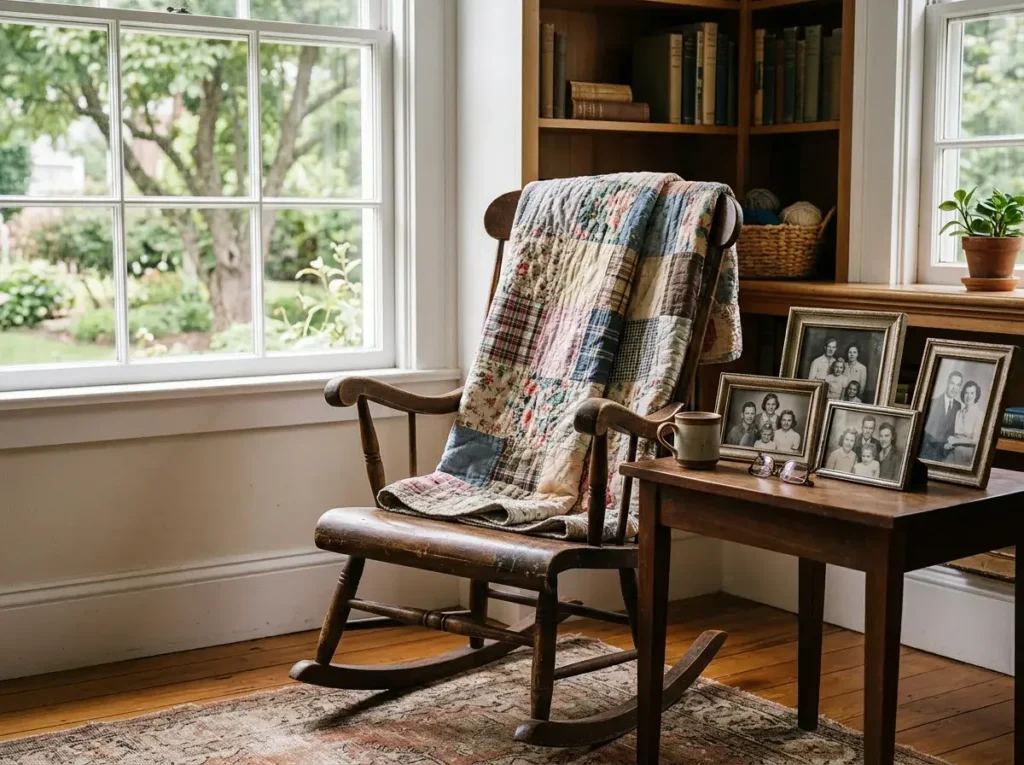
One of the clearest signals that a senior living community is the right fit is how it handles the personal details of a new resident’s arrival. Bringing familiar objects into the new space, whether it’s a favorite chair, framed photos, or a lamp from the bedroom, helps bridge the gap between what was and what is. Many families are surprised by how quickly a well-chosen community begins to feel like home once those personal touches are in place.
If your parent is moving into assisted living, ask the community specifically how they support new residents during the first few weeks. The quality of that answer tells you a great deal about the culture of the place. Americare Senior Living, family-led and locally operated since 1981, builds communities where staff know residents by name and by history, not just by care plan.
When Memory Care Is Part of the Picture
For families navigating a parent’s dementia diagnosis alongside a home transition, the emotional weight can feel even greater. A parent with Alzheimer’s or another form of dementia may not fully understand why the move is happening, which can make the experience especially difficult for adult children. Because Alzheimer’s and other forms of dementia can affect memory and behavior differently, understanding what may be contributing to those changes can help families approach the transition with more realistic expectations. It can also make it easier to determine when the consistent routines and supportive environment offered by memory care may be appropriate.
Having a clearer understanding of the differences between dementia and Alzheimer’s disease can also help families make sense of what they are seeing as a parent’s needs evolve. Those decisions rarely happen all at once, and having resources for navigating senior care can provide useful context as questions about care, transitions, and next steps arise. Leaving a family home is rarely a single event. It is a process, and the families who move through it most gently are usually the ones who give it the time and honesty it deserves from the start. Let Americare Senior Living help you every step of the way.